
An International Conference, Birzeit University, 12-15 November 1998
An International Conference,
Birzeit University, 12-15 November 1998
        “… human beings have constructed mental worlds to mediate between themselves and external reality. The artificial environment they have built is an outcome of mental processes--similarly, myths, legends, taxonomies, and science. All these achievements may be seen as cocoons that humans have woven in order to feel at home in nature.” Yi-Fu Tuan, Topophilia (1974), p. 7
“Mountain and plain lie side by side. Summer drought alternates with winter precipitation, including snow. Pastoral nomadism and settled agriculture have been carried on side by side for centuries and are symbiotically dependent.” J.M. Wagstaff, The Evolution of Middle Eastern Landscapes (1985), p. 5 |
Oummi (Mother), song by Marcel Khalifa Here,
we have the past Palestine,
real or conceptual, has been subjected to myriad and
conflicting representations. It has been called the land
of Canaan, the land of the Bible, the Holy Land, the
Promised Land, part of Greater Syria, or prospectively
the site for the Apocalypse and the Advent. Such
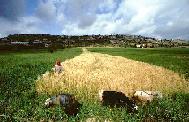
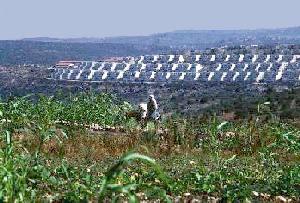
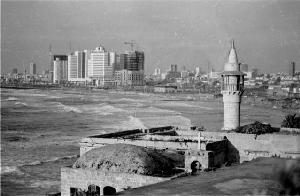
historical or Almost daily the land is transformed, not by natural development and gradual change but increasingly by political designs that disregard (even intend to destroy) the inherent relationship built over several millennia by Palestinian habitation. In addition to outside forces, there are also abuses to the environment and inconsistent planning within the small areas now under PA control. Such ever-fragmenting circumstances make it increasingly difficult for Palestinians to continue to draw on the latent features etched on their land and their memory by the accumulated effect of long presence, cultivation and natural interaction. How can they read their past, present and future in their surroundings? How can the Palestinians maintain the “sacredness” of the land and respect for it that their ancestors instituted without pretending or imposing acquisitive holiness on it? How can they shape and assimilate the landscape of their communities so as not to live in the harsh present or the nostalgic past alone, but through imaginative remembering to create a future that does not violate their cultural heritage? (What God Wants, song by Roger Waters) Past
and present (mis)representations of Palestine (religious,
ethnic or political mythologies) also have played roles
in creating the present situation. Palestine’s
significance as an object has made it the recipient, In order to address these and other related issues, Birzeit University is planning a conference on the place and meaning of the landscape of Palestine in its historic, aesthetic, literary, political, representational and other dimensions. Its emphasis is on bringing together different perspectives, linking analyses and generating new theory. The conference aims to heighten awareness about the subject in the local, regional and international contexts, develop terminology and conceptual frameworks for policy development, and so encourage specific future discussions and practical applications. This conference is the first of its kind in a Palestinian context, and its concerns are therefore multidisciplinary and exploratory in nature.
|
|
 imaginary designations
appear more and more distant from present realities.
Geographic Palestine is still undergoing physical
dismemberment and is divided into areas with various
appellations, such as the Gaza Strip, the West Bank,
Israel, OPT, PA and other such imposed terms.
 often, of artificial
and incongruous ideas and physical elements--from
ideologies to imported building styles and vegetation. It
might therefore be validating to understand the permanent
values inscribed upon the land as these values compare to
landscapes and concepts about landscape available in
other cultures.
