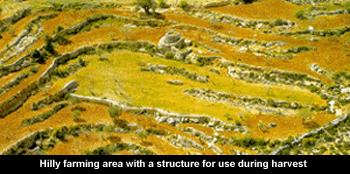
An International Conference, Birzeit University, 12-15 November 1998
An International Conference, Birzeit University, 12-15
November 1998
        “Human beings are a fragment of nature, and nature is a figment of humanity.” Salim Kemal and Ivan Gaskell, Landscape, Natural Beauty and the Arts (1993), p. 3
|
PLANS FOR EXHIBITIONS Sanarjiou yawman ela hayyena (One Day We Will Return to Our Neighborhood), song
by Fairouz In line with the themes of the conference, several exhibitions will be held under the broad title of Viewpoints, as a way of focusing on the multiple ways there are of representing Palestinian landscape. 1. A Major Retrospective
of the Treatment of Landscape in Palestinian Art:
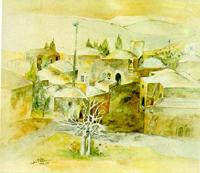
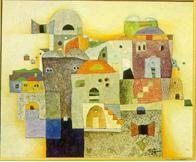
This exhibition would provide the opportunity to re-look at the way in which Palestinians
have interpreted and represented the Palestinian landscape in their art. Art works will be
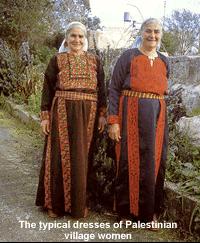
drawn from Palestinian artists worldwide. The following themes will be emphasized: 2. Re-Presenting the Palestinian Peasantry: This exhibition would be a historical inquiry into the ways in which the Palestinian peasants have been represented, from the 18th century to the present day. The exhibition will draw on a wide range of visual and textual material in order to suggest the different ideologies that have worked to construct an image of the Palestinian peasantry. The show would examine foreign travelers' accounts in the form of written descriptions, etchings, drawings, prints and photographs. This material would also be juxtaposed with observations and writings of Arab travelers and local inhabitants. The intention is to interrogate the politics underlying the particular representation of the Palestinian landscape and its inhabitants. The exhibition could then explore how the figure of the peasant male/female and artifacts associated with the peasantry have been re-appropriated and invested with new significance within Palestinian popular culture. This provides space to question the way contemporary culture constructs images of the landscape through its representations of the peasantry.
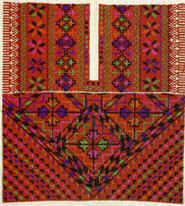
3. Other Exhibitions: There will also be a number of purely photographic exhibitions to cover the work of 19th and 20th century Palestinian and international photographers. Another exhibition might focus on the development and transformation of particular towns--for example Bethlehem, Ramallah, and Nablus--through an examination of old photographs. The emphasis would be to combine these with oral narratives and to bring different sectors of the community into the gallery, in the hope that this would generate discussion around the particular memories these images evoke. An ethnographic exhibit will show distinctive forms of material culture (costumes, pottery, artifacts), highlighting Palestinian relationship to the land. An exhibit of antiquarian and new maps and books will highlight topics relevant to the conference. Another exhibit presents the more than 400 Palestinian villages destroyed or evacuated in 1948.
|
 Running
for approximately a week, including the duration of the conference, there will be a number
of exhibitions held in venues on and off campus. The exhibits will display a range of
mediums that represent Palestinian landscape and material culture. There is a possibility
that some exhibits would tour other countries and other regions of Palestine.
 theme of Palestine as Motherland.