
An International Conference, Birzeit University, 12-15 November 1998
An International Conference, Birzeit University, 12-15
November 1998
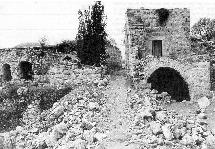
        “By the end of the war, hundreds of entire villages had not only been depopulated but obliterated, their houses blown up or bulldozed. While many of the sites are difficult of access, to this day the observant travelers … can see traces of their presence …: a fenced-in area—often surmounting a gentle hill—of olive and other fruit trees left untended, of cactus hedges and domesticated plants run wild. Now and then a few crumbled houses are left standing, a neglected mosque or church, collapsing walls along the ghost of a village lane, but in the vast majority of cases all that remains is a scattering of stones and rubble across a forgotten landscape.” Walid Khalidi, ed. All That Remains (1992), p. xv
“Landscapes are always encountered as part of a social activity. ... any process of inquiry in landscape perception should allow for the participation of the observers in purposeful activities relevant to the landscape in question.” Fahriye Hazer Sancar, “Toward Theory Generation in Landscape Aesthetics” in Environmental Aesthetics, ed. Jack L. Nasar (1988), p. 466 |
ASSOCIATED ACTIVITIES Jaay el-hammam (The Doves are Coming), song by Sabreen . Cultural Performances Community Outreach This process has already started with an invitation to Tamer, a community educational centre, to relate some of its projects for 1998 to coincide with the conference. One such project involves children and youth responding to their surroundings (through field trips, then writing or painting or composing artistic work) in an attempt to formulate notions about their identity. It is expected that such a project will result in a presentation at the conference by the coordinator and the youth participating in the project. Another possible presentation concerns architectural styles in Palestinian villages and towns, to be organized by Riwaq, a non-governmental organization that has been studying and preserving architectural forms. Such projects could inspire further outreach activities at schools and other institutions, relevant to ecology and environment. The conference will also seek similar involvement by other centres and non-governmental organizations concerned with issues related to the conference themes.
|
 Landscape Tours
