
|
|
|
||||||||||||||||||||||||||||||||||||||||||||||||||||||||||||||||||||||||||||
|
Middle East
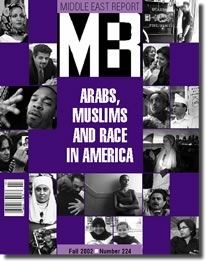
Research and Information Project Middle East Report 224 Fall 2002 ARABS, MUSLIMS AND RACE IN AMERICA
While Arabs, Muslims and those mistaken for them have faced hate crimes and intolerance from American society, the greatest purveyor of discrimination against Middle Easterners since September 11 has been the US government, explains sociologist and immigrant rights advocate Louise Cainkar. By targeting Arabs and Muslims, the provisions of the USA PATRIOT Act and other new regulations have exacerbated existing feelings of exclusion among those communities. As scholar Salah D. Hassan argues, the exclusion experienced by Arab-Americans and Arab immigrants relates to their opposition to US Middle East policy and their uneasy place in the binary racial thinking still prevalent in US law and culture: are Arabs "white" or are they people of color? Researcher Hisham Aidi debunks the warnings of an Islamist "fifth column" in US inner cities sparked by the cases of alleged "dirty bomber" Jose Padilla and others, and links the rise of Islam among African-Americans and Latinos to persistent inequities of race and class. But amidst this evidence of the weakness of US multiculturalism, there is more encouraging news. Americans are mostly not willing to impose special limits on the civil liberties of Arabs and Muslims, according to survey data collected by political scientist Kathleen Moore. Furthermore, as anthropologist Ted Swedenburg reports, the "Arab wave" in world music continues its progress toward breaking through in US popular culture. Also featured: Fareed Mohamedi and Raad Alkadiri dissect the logic driving the Bush administration's war plans for Iraq; Mouin Rabbani lays out the dimensions of the crisis facing Palestinians nearly three years into their uprising; Elliott Colla looks at expressions of solidarity with the Palestinians in Egyptian pop culture; and more. Subscribe to Middle East Report or order individual copies online at www.merip.org. For further information, contact Chris Toensing at ctoensing@merip.org. Middle East Report is published by the Middle East Research and Information Project (MERIP), a progressive, independent non-profit based in Washington, DC. Since 1971 MERIP has provided critical analysis of the Middle East, focusing on political economy, popular struggles and the implications of US and international policy for the region. MERIP phone: (202) 223-3677 |
|
|
|
|
Home
| Contact/Intern |
Info | Middle
East Report | Press Info Notes |
Media Outreach |
Giving |




























 visitors
since March 1, 2000.