
Additionally, JWU took over the inoperative and obsolete networks of Der Dibwan, Biteen and Kafr Malik which further impeded proper performance of water supply and created more difficulties for JWU.
At present, JWU uses galvanized steel pipes 3/4 - 2 inches in diameter, threaded at both ends and are joined by threaded joints in accordance with the ISO medium, BS 1387 medium DIN 2440 standards. It also uses 3 - 16 inches in diameter pipes, with cement lining and coated by two layers of asphalt and fiber glass or by plastic wrapping to protect the pipes against corrosion and increase the service lifetime. These pipes are joined together by welding as per IS 530, BS 534 standards.
Due to lack of adequate funds, JWU was not able to expand its distribution network to cover un-built sites or newly planned zones in anticipation of connecting future buildings. JWU can only connect pre-paying consumers taking into consideration the possibility of future development in the particular area in as far as what size of pipes to use when connecting the area.
The network in the main cities and villages consist of pipes connected in rings as a circulation system. The total length of the distribution network is 709,569 meters. The Following table and chart show the diameters and lengths of network pipes.
Table 7 Network Lenght and Size of Pipes
| Size in Inches | Length in Meters |
|---|---|
ONGOING AND PLANNED WATER DISTRIBUTION PROJECTS
JWU has prepared a study for the replacement of the old and obsolete networks by using computer aided programs to determine future consumer demands in the different areas and set priorities on replacing these networks. Some replacements took place already, such as increasing the conveying capacity of the Kafr-Malik and Der-Dibwan lines by replacing the old small diameter pipes with bigger diameters, others still taking place such as the old lines in Ramallah and El-Bireh, yet, more will be planned when funds become available. The following table shows ongoing and planned network projects:
Table 8 Network Projects
| Area/Town | Project Type and Progress | Length in Km | Amount in Million USD | External Financing |
|---|---|---|---|---|
| Ramallah and el Bireh | Rehabilitation of old networks and replacement of obsolete pipe lines in the Ramallah & El Bireh area. In progress as of Oct. 1995. | 40 | 1.12 | USAID through UNDP. |
| Ramallah and El Bireh | Laying a new 10" loop conveying pipe line through World around the Ramallah Bank & El-Bireh Area. In PECDAR progress as of Oct. 1995. | 12 | 0.85 | Saudi Arabia |
| Deir-Dibwan | Replacing existing 4" with 6" and parts of the network. Jun. 1995. | 8.5 | 0.23 | USAID through UNDP |
| Bir-Zeit | Laying 10" main conveying line to Bir-Zeit. Jul. 1995. | 6 | 0.47 | Saudi Arabia through PECDAR |
| Kufar Malik | Replacing the old Network. Project completed. Mar. 1995. | 11.4 | 0.175 | USAID through UNDP. |
| Taybeh,Deir Jreer & Ramoon | Replacing the old conveying line with 6" line. Dec. 1994. & Ramoon | 0.130 | USAID through UNDP. | |
| Bir-Zeit | Extending the main line | 1.4 | 0.17 | Seeking Funding. |
| Airport Runway Line | Replacing the existing 6" line with a new 10" pipe line | 2.4 | 0. 3 | Seeking Funding. |
| Ramoun | Main conveying 4" line | 3.0 | 0.25 | Seeking Funding. |
| Deir Dibwan line | Extending the main 6" | 2.7 | 0.25 | Seeking Funding. |
| Salwad | Rehabilitation of old network and replacement of obsolete main pipe lines | 0.8 | In the design stage | |
| Ramallah and El-Bireh | Second phase of rehabilitation of the old network. | 2.0 | In the design stage | |
| JWU area of Supply | Extending the existing network to new not served neighborhoods. | 2.0 | In the design stage | |
| Al-Amari Refugee Camp | Replacement of obsolete network | 0.4 | In the design stage | |
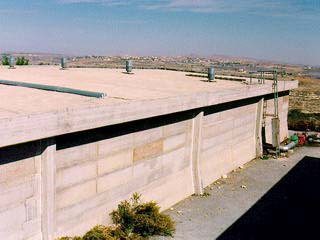
Due to the low per capita share of storage water during the past years and due to feelings of insecurity and repeated power failures leading to disruption of water supply, Jerusalem Water Undertaking has plans to construct 4 Reservoirs in the area as described below:
Table 9 Proposed Reservoirs
| Reservoir | Capacity M3 | Areas to be Served | Cost in US$ |
|---|---|---|---|
| Mazra'a Sharqiya | 2000 | Tormosaia, Abu falah, Sinjel, Jelijilia, Aroura, Ebwain, Mazare El-Nobani, Ajoli, Der Elsoudan and Almogayer | 250,000 |
| Dora el Qar'e | 2000 | Ein Sinia, Jalazon, Jifna, Dora El Qar'e, Abu Shkedem, Mazraa Qiblia, Koder, Atara and Um Safa, Burham and Jeebia. | 250,000 |
| Assor Mountain | 3000 | Kufr Malik, Ramon, Taybeh and Der Jreer | 300,000 |
| Der Dibwan | 2000 | Der Dibwan | 250,000 |
| Total | 1,050,000 | ||
1. Standard Operating Procedures (SOPs). Incorrect, laying of pipes, installation of manholes, and maintenance of meters have been reported. JWU cannot ensure the proper carrying out of technical activities without the existence of SOPs. The development of these standard procedures should be assigned to consultants and to a JWU engineer who will be instructed to work very closely with the technical personnel who conduct these activities. All new recruits should be trained on these SOPs and upon the introduction of the SOPs all existing personnel should be retrained based upon the SOPs.
2. Following the implementation of the SOPs, JWU should consider implementing some form of reporting procedures following maintenance and other technical activities. Reports should include indications of labor and time required to execute the activity. These reports can be subsequently used to estimate the cost of these activities (to be used in the pricing of the activities) and for performance evaluation of the employees.
3. Maintenance Programs for distribution network and pumps. The implementation of Preventive Maintenance (PM) on the distribution network and pumping stations will probably greatly reduce leakage and break down of pumps. Maintenance cards should be prepared and a computer system developed to keep up with the scheduled maintenance activities.
This program will also provide in the future reports on the performance history of each item maintained. The implementation of GIS and a Leak Detection Unit (acting as an inspection team) will support the implementation of PM.
4. Classification of contractors. Information on many of the contractors with which JWU deals will be gathered and rated. Prior to inviting any contractor to participate in a tender, it is recommended that the contractor be required to fill out a special form.
5. Establish a system to test and license pipe fitters. In order to regulate this profession and keep up the work standards at the premises of the public.
6. Coordinate with the Engineers Association. To establish clear guidelines when planning new buildings and to indicate clearly the locations of the interior pipes, tanks and possible location of the meters taking into account, the Undertaking's rules and regulations and safety factors.
7. Establishment of the Geographic Information System ( GIS ).
This system will include Computer Hardware, Software, Plotter, Scanner Digitizing Equipment and Employee's Training, etc. The mapping system in JWU is primitive since maps are updated manually. There is a need for a system to store and retrieve maps as needed and JWU is actively seeking funding for this system.

