| Gazelle Bulletin
About Gazelle
Mammals in Palestine
Wild Cats in Palestine
Leopards in Palestine
Birds of Palestine
Land Invertebrates
Indigenous Animals
Diversity of Life
Extinct Animals and Reintroduction
Environmental Affairs 1
Environmental Affairs 2
Nature Conservation
Favorite Links
Guest Book and References
|
|
|
Legged Snake Fossil from Ein Yabrud, Jerusalem
Researchers from Southern Methodist University, Dallas (USA) have described an intriguing new species of fossil snake with legs that was found in the Ein Yabrud limestone quarry, north of Jerusalem. In a paper published in March 2000 in the Science Journal, SMU paleontologist Prof.Louis Jacobs and several international co-authors say the fossil snake is important because it provides new information on the evolution of snakes. The fossil snake, which lived 95 million years ago, is named Haasiophis terrasanctus after a Hebrew University professor named George Haas who obtained it from quarry workers more than 20 years ago. The well-preserved fossil sat largely unstudied in storage until Mike Polcyn, an SMU graduate student in paleontology, brought back pictures of it and other undescribed specimens that he took while on a business trip to Occupied Palestine in 1996. "We immediately decided we needed to go back and organize a joint project to research and publish on this unique location and the animals preserved there," Polcyn said. Haasiophis is a little over a meter long and has hind legs about 2 cm long that extend all the way to the toe bones. Its head and lower jaws are intact. "It is extremely rare to find a fossil snake head preserved because they usually get spread and scattered," Jacobs said. Haasiophis is the second limbed snake to come from the limestone quarry near the villages of Ein Yabrud, north of Jerusalem. George Haas published a description of the first limbed snake, Pachyrachis problematicus, in 1979, but at the time he placed it not as a snake but as a marine lizard known as a dolichosaur. Some scientists believe Pachyrachis represents the most primitive snake known and provides evidence of a link between mosasaurs giant swimming lizards of the Cretaceous Period and true snakes. In the past 20 years, however, researchers have developed more quantitative methods of evaluating relationships between species based on unique anatomical details. The analysis of the head and jaws of Haasiophis presented in the Science article places it closer to more advanced terrestrial snakes such as boas and pythons and suggests that neither Pachyrachis nor Haasiophis has anything to do with snake origins. "As a result of this analysis, it seems less likely that snakes evolved from mosasaurs," Jacobs said. Scientists believe snakes evolved from a group of lizards prior to 100 million years ago. During the evolutionary process, their headbones changed, they developed long bodies with specialized vertebra and muscles, and they lost their legs. Jacobs said analysis of Haasiophis indicates that snake feeding apparatus, body form and locomotor pattern all evolved before the hind legs were lost. "The fact Haasiophis had legs means that either snakes lost their legs more than once or they re-evolved them," Jacobs said. He speculates that the tiny legs on Haasiophis were somehow used in reproduction and stimulation, much like the spurs on anacondas are used today. They are too small in relation to the reptile's whole body to have helped it move. During the Cretaceous Period, the area that includes the Middle East was a shallow sea with patches of reef and limestone deposition, much like the modern-day Bahamian reef. At one point about 95 million years ago, the sea level fell, making a quiet area on this limestone shelf. Animals washed into the area and fell to the bottom. With no scavengers to eat the bodies, they eventually fossilized within the limestone. Paleontologists also have found fossils of sharks, turtles, primitive mosasaurs and plants in the Ein Yabrud quarry. Analysis of Haasiophis also adds to the debate over whether snakes originated on land or in the sea. Haasiophis lived in the sea, and Jacobs believes it may represent the first invasion of the sea by snakes.(SMU News). |
|
|
Das Landwirtschaftliche Palaestina
Palaestina ist ueberwiegend noch heute ein Land, das von seiner Landwirtschaft, Feldbau, Baumkulturen und der Viehzucht lebt. Industrie, auch solche handwerklichen Stils, findet sich nur in den groesseren Staedten.
Die Landwirtschaftlichen Produkte,Bananen, Oliven, Feigen, Zitrusfruechte werden zu einem grossen Teil ausgefuehrt. Im Westjordanland ist der genuegsame Oelbaum vorherrschend, desgleichen der Feigenbaum. Daneben steht der Granatapfelbaum, dessen rotschalige Fruechte ausgepresst einen herbschmeckenden Saft liefern, der als erfrischendes Getraenk gern genossen wird. Der Oelbaum ist auch beliebt als Schattenspender. Dabei steht aber das Geaest nicht so dicht, dass es den Luftzug absperrte, sondern gewaehrt neben der Moeglichkeit des Schattens auch die erfrischender Kuehlung, sofern eine Windbewegung herrscht. Die Bemuehungen des Landes werden hoffentlich das Land reicher bewaldet sein lassen, als es bisher war. Dabei spielt der Gesichtspunkt der Landschaftsgestaltung eine wesentliche Rolle. Wirtschaftliche Ruecksichten, die man fuer die Waelder geltend machen kann, gelten wohl nur fuer die Holznutzung, weniger fuer den Schutz des Bodens vor Austrocknung. Auch als Windschutz sind sie von Bedeutung.
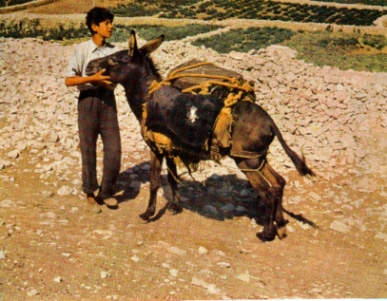
Zur Arbeit werden Esel, Pferd und Kamel verwendet. Dabei wird neben dem fuer groessere Lasten und laengere Strecken gebrauchten Kamel der Esel zum Tragen von Lasten, aber auch zum gelegentlichen Reiten benutzt. Der Esel, traegt zum Beispiel Wasserbehaelter, und sie zeigt die Vereinigung altpalaestinischer Sitte und moderner abendlaendischer Zivilisation. Altpalaestinisch ist der aus schwarzem Ziegenfell gefertigte Wasserschlauch, modern ist aber der Benzinkanister. An Palaestinischen Quellen kann man zu verschiedenen Tageszeiten die wasserholenden Frauen beobachten, wie sie zum transport des Wassers die einheimischen formschoenen Tonkruege verwenden, deren poroese Wandung eine geringe Verdunstung des Wassers ermoeglicht und dadurch das Wasser kuehl und erfrischend erhaelt.
|
|
A Palestinian Zoologist : Dr. Sana Issa Atallah
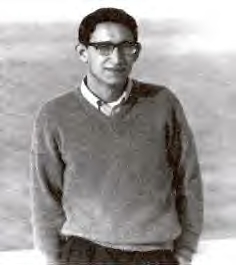
Dr. Sana Issa Atallah was born in Beit Sahour, Palestine on May, 20, 1943 . He graduated from school in Bethlehem to continue his study in the American University in Beirut. In 1963 he had his B.A degree in Biology. He continued to work as an assistant researcher and got his Master degree in 1965. He had his Ph.D. in 1969 from the University of Connecticut, USA. His thesis was "Mammals of the Middle East" and included three thousand specimens that he collected himself and a vital scientific study as well as the discovery of sub-species such as the Golden spiny mouse "acomys rassatus harrisoni". Dr. Sana Atallah was a phenomenon because of the enormous scientific attributes he provided to the world at the age of 27. Dr. Sana Atallah died in a car accident in Iran during his field work on January, 17, 1970.
|
|
|
|