Cactus
Our visit to Iraq al Manshiyya
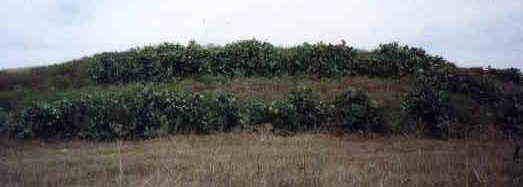
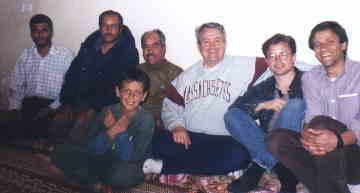
Our son stayed in a Palestinian refugee camp with a family for two months
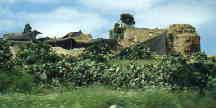
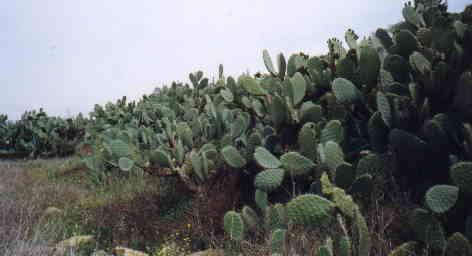
before his junior year in college, at the American University in Cairo. The highlight of our trip to Palestinewas visiting the site of Iraq al Manshiyya, the village where the father had lived. He showed us where he hid from bullets when he was 15 years old in 1948. At the end of the war the United Nations decided residents could return to this village. The Israelis agreed, but then the Israelis forced the residents to move to a refugee camp. The village well was so deep, and the water so pure, the Israelis recognized it as an ideal site for development. So now the village of Iraq al Manshiyya is gone, but these cactus fences remain, just outside of Kiryat Gat, an industrial Israeli city. |
|

Excerpt from the Armistice Agreement
From: Walter Eytan
Head of the Israeli Delegation at Rhodes
In connection with the Egyptian-Israeli General Armistice Agreement, I confirm
the understanding that, in the course of the evacuation of the Egyptian
Force at Al Faluja, provided for in Article III of the Agreement, such of
the civilian population at Al Faluja and Iraq Al Manshiya as may wish to
do so may also be evacuated along with the Egyptian force. Those of
the civilian population who may wish to remain in Al Faluja and Iraq Al
Manshiya are to be permitted to do so. Those of the civilian population
who may wish to do so may proceed to the Hebron area under United Nations
escort and supervision. All of these civilians shall be fully secure in
their persons, abodes, property and personal effects.
The Government of Israel reserves the right to treat as prisoners of war any persons electing to remain in the Al Faluja and Iraq Al Manshiya areas who may be identified as having taken part in the fighting in Palestine.
Signed: Walter Eytan
.
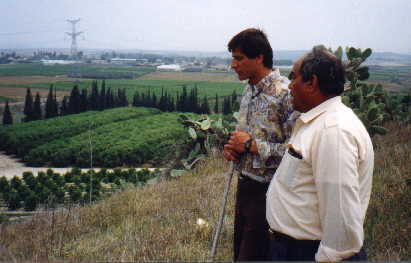
It was the first time the son had seen his father's village.
When the Israeli soldiers stopped our rented car at
the checkpoint they did not ask to see papers, or the
son still would not have visted Iraq al Manshiyya.
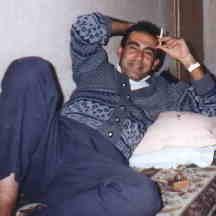

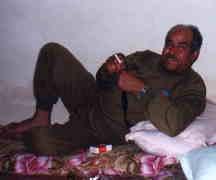
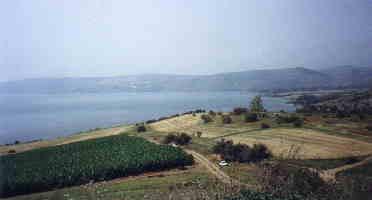
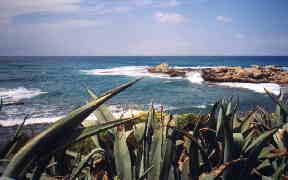
.
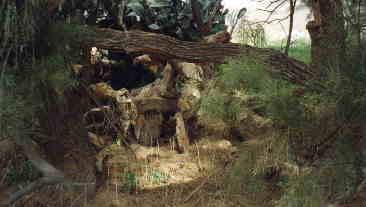
A simple place in Palestine where a grandfather may have played when he was young, but a grandson cannot explore because of fences and checkpoints.
.
In a few places there are Bedouins living in tents among the stone walls
and cactus fences. But mostly the cactus plants stand as sentinels to a
silent past.
The Palestinian word for cactus means "patience," because you
must patiently remove the melon-like fruit from the cactus and patiently
prepare it for the table. This refugee father we met has taught his sons
to have patience, but it is difficult for oppressed young men to be patient.
It would be difficult for any of my sons to be patient.
I believe, if I were Palestinian, that I would have long ago lost my patience.
As an American, and a Christian, I am ashamed of what we have let happen here.
With my fingers on a computer keyboard, I will continue throwing stones.
And now you know why we call our place cactus48.com.

A Cactus Memory
By Nasser Abufarha
I have both an emotional attachment, and great appreciation to the cactus tree.
My grandpa (Sidi) used to wake us up early every morning in the month of July after he had collected two big buckets of cactus fruit from the nearby hillside. He used to get there at dawn, before sunrise when the fruit is still cool before it is hit by sunlight, and before there is a breeze in the air so the tiny thorns don't blow at him while picking.At home we the children would all sit around my grandfather and my father and they would cut the cactus fruit open and feed us. As they handle the thorny fruit with their fingers to cut it open and put the sweet juicy fruit in my mouth, those bites also carried love, care, and sacrifice. In this setting, the cactus fruit is building the bond of love and appreciation to one another in Palestinian society.
I appreciate the cactus tree for its resilience and patience. As the Israelis continuously plow the outskirts of the over 400 Palestinian villages they destroyed, this resilient tree keeps coming up again and again. It has been my guide to destroyed village sites in Palestine. This tree is so patient which is what the name for it means in Arabic, "Sabir".
For over fifty years those cactus trees in stolen Palestine produce their fruit every season and don't find the people to pick them (they are surrounded by strangers who don't know how or when to pick them, or what they taste like, or if they are even edible). They are patiently blooming their beautiful yellow flowers every spring and fruiting every summer hoping that the people who know them would come the next season.
We shall return,
Nasser Abufarha
nasserabufarha@hotmail.com

Passion for Palestine | |
Return to our | |