



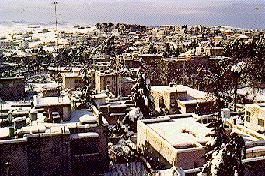
Internationals who come to study at Birzeit University will find that life on campus and in the country is intrinsically different from life in their own country with regard to personal lifestyle, leisure activities and behavior patterns. These factors should be considered seriously and weighed against personal interest in discovering a stimulating and different way of life before deciding to study in the West Bank.
The life and freedom of Palestinians is severely affected by the daily realities of military occupation and the current transfers of authority. Military-imposed measures include restrictions on movement inside and outside the West Bank, frequent identity checks, imprisonment, and abuse of the local population.
International students are in general not subjected to the same restrictions. Nevertheless, when living in the West Bank they may be affected indirectly by them, usually through Israeli curfews and closures of Palestinian areas.
The Intifada, the Palestinian uprising that started at the end of 1987, influenced life in the Occupied Territories in many ways. As an expression of protest and resistance against the occupation and in solidarity with those imprisoned and killed during the Uprising, leisure activities and celebrations were generally held in a restrained manner.
Festive gatherings took place mainly within the family and close community circles. Generally only a few public places were found for socializing outside the home, mainly during daytime or in the early evening. With the changing realities brought by Palestinian autonomy, however, more restaurants and cafes are beginning to open in the Ramallah area, with an accompanying general relaxation. For students, the University campus is still a central place for socializing.
The Birzeit University Student community mirrors Palestinian society in its diversity of people from various backgrounds; incorporating Muslims and Christians, villagers, townspeople, refugees and a wide spectrum of political groupings, all bringing with them their own cultural and political expectations.
In preparation for the new environment, students are advised to inform themselves about Palestinian society and politics in the region through a variety of books and articles available on the subject. Students with access to the World Wide Web may like to visit the university's on-line travel guide to Birzeit University and the surrounding area, found on: http://www.birzeit.edu/ramallah
To help introduce international students to some of the issues and conditions under which they will be living, Birzeit University requires PAS students to attend an orientation program during the week prior to the commencement of classes. The program includes talks about: housing and living conditions; rights as foreigners and students; transport; health facilities; and a special workshop on human relations. Students are also encouraged to seek the advice of fully trained student counselors on campus, should the need arise.
The climate between June and September is usually dry and hot, but even the hottest summer days become cool in the evening. In general, casual clothing is appropriate for summer wear but shorts and halter or open tops for women and shorts for men are not suitable anywhere in the West Bank or Gaza. During winter, from November to April, temperatures cool considerably and heavy winter and rainproof clothing is necessary. At night, temperatures can drop to below zero degrees Celsius and snow may fall occasionally. Most apartments do not have central heating.
Depending upon nationality, foreigners are required either to obtain a visa to Israel in advance, or upon arrival at the airport. Check with your local Israeli Embassy. Generally, student visas are not granted to internationals who study at Birzeit. Students are advised to enter the country on a 3-month tourist visa, which may need to be renewed during their stay.
The following accommodation options are available to PAS students:
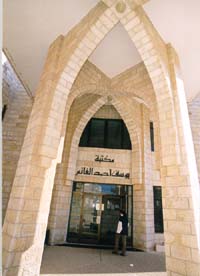
Medical Clinic The Birzeit University medical clinic is available to all students free-of-charge during University hours. The medical staff arranges referrals to specialist services and practitioners.
Next section: PAS Program lecturers and their Specializations
Contact the PAS Program by e-mail on pas-isp@admin.birzeit.edu