|
|
Bethlehem, Palestine
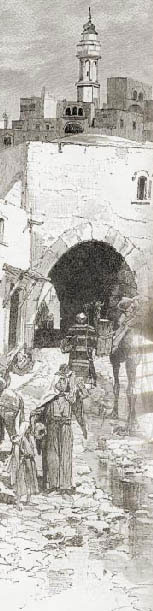
Two thousand years ago, wise men and shepherds gathered in Bethlehem to worship a child that promised peace on earth and goodwill for all. Today Bethlehem promises a celebration for the Millennium that is rich in meaning - a journey to human heritage and a gathering of humanity for the future.
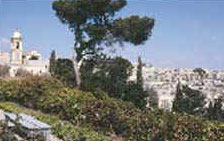
Bethlehem lies 10 km south of Jerusalem, 765 m above sea level, on
the edge of the Bethlehem Wilderness. It provides stunning views of
the mountain range of Jordan beyond the Dead Sea. An ancient
landscape of vineyards, olive trees and tiny villages surrounds the
town. Bethlehem is famous for its olivewood hand carvings, its
mother-of-pearl jewelry and its distinctive and rich
embroidery, as well
Traces
Of History
A
Glimpse Into The Past
Quarters
Of Bethlehem Located
west of Manger Square is the first of Bethlehem's historical
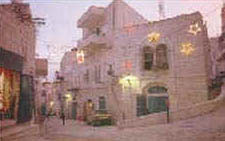
Residential Quarters, Harat al-Najajreh. Located northwest of Manger Square, along the ancient Star Street is Harat al-Farahiyeh. Named after the Christian Patriarch Farah (Joy), who like the Najajreh was a descendent of the first Christian tribes, the people of this quarter came in early Christian times from Wadi Musa on the eastern side of the Jordan River.
The
Living Faithful
In and around Bethlehem a number of exciting sites are waiting to be discovered: The Church of Nativity, one of the oldest churches in the world, built by St. Helena in 334 above the Grotto of the Nativity; the Shepherds' Field in Beit-Sahour, where the Angel announced the Good News to the Shepherds; Solomon's Pools with the Ottoman Fortress, which provided Bethlehem and Jerusalem with water throughout the past 2000 years and the Desert Monasteries which are the living witnesses of early Christianity. With the coming of the Crusades, a third quarter just north of Manger Square was established in Bethlehem Harat al-Tarajmeh (or Quarter of the Translators) was named after the Italian founders (almost all men) who had married Arab Christian women and worked as translators for Franciscan priests and pilgrims. During the Ottoman Period (early 16th Century) three additional "tribes" established quarters in Bethlehem. The tribe, which established Harat al-Qanatre, just south of the Nativity Basilica came from Antar (meaning Brave), near Herodium. Another tribe came from Tekoa and settled south of Manger Square to build Harat al-Qawawse. Residents of Harat al-Hraizat, to the north of Manger Square came from a village south of Jerusalem called Um Tuba. In 1780 the first Muslim Quarter was established when a group of Muslim villagers joined hands with the Christians of Bethlehem in refusing to pay the Ottoman Sultan taxes. Harat al-Fawagreh, on a hill to the west of the city, was thus established by these Muslims who had migrated from a nearby village called Fagur which was close to Solomon's Pools.
|


 as its friendly people.
 According to local folklore
residents of this quarter are descendents of the Ghassanites, who
were the first Christian tribes of the region. The Ghassanites came
from an area, which today is in Northern Yemen, in a region known as
Najran. The Najajreh tribe joined another grouping of families known
as Rathabreh, who had come to Bethlehem in early Christian times
from Greece.
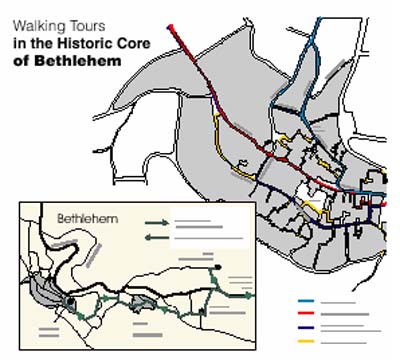 The tourism
circuits are intended to provide groups and individual tourists with
suggestions and encourage them to discover the treasures of the
historic core of Bethlehem as well as the historic pilgrims route
between Shepherds' Field and the Church of the Nativity. Starting
point for the Bethlehem inner city walking tours for groups are Star
Street and Madbasse Square.