 |
Birzeit's Student Council 1999 Election  |
||
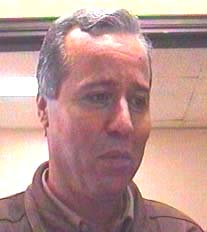
| . | Interview with Ziad Izzat, Dean of Student Affairs and member of the 1999 Student Elections Preparatory Committee "Who makes up the Preparatory Committee?"
The Committee is made up of 8 individuals, including 4 BZU professors from the Office of Student Affairs and each of the departments at the university, and 4 students, a representative from each of the student blocs, on the condition that they are not running in the elections. "When is the Committee formed?" The Committee is formed at the beginning of the third week of the first month of the second semester at the university. At the end of this week, the current student council is disbanded, and the 8 individuals who make up the Committee then take over the regular activities of the student council. The 4 student representatives on the Committee take on the decision making role of the student council, while the 4 professors on the committee oversee their activities. The committee then decides when the elections will take place, the procedures of the election, the time schedule for the election campaign and day, and all other details required to run the elections. This committee is also responsible for approving any activity, leaflets, etc. which are issued by the student blocs during the period after the student council has been disbanded and the first day of the election period. "How are the elections organised?" From the approximately 4,100 students registered at Birzeit University, 3,578 students are eligible to vote. Those who are not eligible to vote are Masters and Special Program students, as well as foreign students registered in the Palestine and Arabic Studies Program. There are a total of 51 seats in the student council parliament. The number of votes needed to gain a seat in the council is decided by the number of actual voters divided by the 51 seats. For example, if all 3,578 students eligible to vote did vote, a bloc would need to secure 70.1568 votes for each seat. The total number of actual voters is tallied at the end of the election day, this year at 4:30 PM on 24 March 1999, and seats will be allocated accordingly. Students will recieve the unofficial results of the election that same evening. "How have the elections differed these past three years from previous years?" In the past, any student bloc which took the majority of votes would take the whole student council. In the past three years, we have used a parliamentary system, where if a bloc won 26 seats, they would take the whole student council, or more than one bloc which have together won a total of 26 seats, can take the student council as a coalition, and chose not to include the other blocs. If none of the blocs win a total of 26 seats, or there is no agreement to form a coalition student council, then the council is divided amongst the blocs according to the number of votes won and the number of votes needed for each seat. "What is permitted and not permitted during the elections?" It is permitted for student blocs to present their platforms in a peaceful manner such as through plays, sketches, election speeches, marches, etc. These activities are allowed to contain commentary or ideas which are focused against or criticising other blocs on campus. Student blocs may focus on political issues as well as student issues in their election campaign. Militarization on campus is not allowed. For examples, representations of soldiers carrying guns, or violent representions in marches is not permitted. Student blocs are not permitted to curse or offend other student blocs in their campaigns. However, criticism of other student blocs in a non-offensive manner is permitted. Ten individuals from each student bloc who are not students or are from outside of the university community are permitted to attend the campaign on campus, but are not permitted to participate in the actual campaign. On the day of the election, it is prohibited for any individual other than students to enter the campus before 4:30 p.m. After 4:30 p.m., the campus is open to all. However, no one is allowed to enter the designated area where the votes are counted apart from one representative from each of the participating blocs, the University President, and the Election Committee. "How does the Election Committee ensure that the election results are correct, and that no cheating takes place? Each stage of the voting process is computerized, with the final results appearing after the final ballot is counted. The number of ballots must be equal to the number of students voting. Each ballot must carry an official stamp. For the last ten years, their has been no problem with the election results. Before the Election Committee opens the election polls, they ensure that there were no problems with the election boxes, or the election rooms. If any of the student blocs disagree with the results, they are permitted to submit an official complaint to the Election Committee. After the election room has closed, each student bloc forms a small party while waiting for the results. Everyone dances and listens to music and, at approximately 9:00 p.m., the election results are announced and the bloc continue their parties until morning in Birzeit village. In cases of emergency resulting from the stresses of the intensive campaigns, the University medical clinic stays open until 10:00 p.m. The day before the election day, a debate is held with a representative from each of the running blocs. No one is permitted on campus other than students and faculty and staff. Each bloc is asked approximately five questions about their goals, and are allowed to present their ideas and election platform to the student body. "What is the procedure for new blocs who wish to participate in the student elections?" New blocs wishing to participate in the elections must submit an official application to the Office of Student Affairs, and the Student Council Election Committee three months prior to the election day. The Student Council Election Committee and the Office of Student Affairs must approve their application. |
Reported and Presented by Birzeit
99 Elections Team.
Contact: webmaster@birzeit.edu