Dorothy Hodgkin left her mark on the world in a way that few do. In her distinguished career, colleagues acknowledged her as "one of the foremost British scientists of this century" who, until her passing away last year after a lifelong battle with rheumatoid arthritis, had struggled to carry out her work despite the pain and inconvenience of disability.
Her research in x-ray crystallography that so impressed the scientific community, was inspired by her association with J D Bernal in Cambridge University, but most of her scientific work was done in Oxford, where she held for many years a Research Professorship of the Royal Society.
Her main achievement was in identifying the structures of Penicillin, Vitamin B12, Insulin, and other complex molecules of great biological and medical significance. For this work she was awarded the Nobel Prize for Chemistry in 1964. The following year in Britain, she was awarded the highest civillian honour, the Order of Merit.
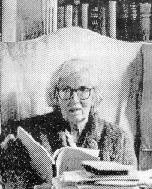
Dorothy was known and loved for her serenity, her gracious personality,
and her profound compassion for humanity. It was the latter that
was touched when she first visited Birzeit at the beginning of
the 1980s, and she went on to serve as a sponsor of Friends of
Birzeit University in the UK until the time of her death.
Dr. Gabi Baramki, former Vice-President of Birzeit University, recalled that when he attended a reception held for him by FoBZU at the House of Commons in December 1992, Dorothy made the long trip down to the meeting from her home in Oxford, despite her health.
She will be remembered by many here at Birzeit, both for her commitment to the university and the way in which she radiated the humanity that beats in the heart of every true scientist.