Discovering Oslo 2 Diary
14 December 1996
Making it to the University, part I
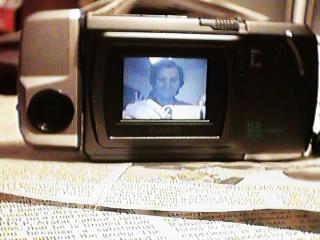
Getting it on
During the making of the special report section of this diary in September/October 1996, I launched an appeal for Web reporting resources in my capacity as Birzeit University’s webmaster to try to solve one of the problems we encountered. With the prolonged commercial strike that accompanied the clashes, we couldn’t process the films we had taken, and asked for donations of digital cameras to avoid the need for processing. Charley Stough in the States and Theo Koppel and Christine Prat in the Netherlands each donated Casio digital cameras, the one from the US arriving just two days ago. Great. So why wasn’t this on the Web as it is being written?
To give you some idea of how new problems replace old ones, the system wasn't up yet. If we want to be able to Web publish in all situations here, there must be three options: the University naturally; Ramallah for when we are imprisoned there; and a mobile option (laptops, modems, and mobile phones). The third option is quite a way off from realisation. As we were still working on the logistics of this, the camera software wasn't yet installed in basecamp Ramallah which has Web access,publishing tools and e-mail, leaving it until today until I got to the university to download the images. This event showed the holes in the system and gave us an opportunity to learn how to use the equipment.
The e-mail address for this diary, for an example of the things that have to be worked out, is a virtual account at Baraka, which sends an e-mail message to Birzeit University and another to Ramallah. This was installed around the time of the March closure of Ramallah out of necessity.
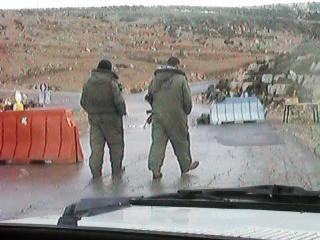
Surda
We got to the University eventually. The way we got there was kind of bizarre. Try to imagine this: the Surda meeting with the now-infamous bypass road cutting across it is U-shaped, with one checkpoint on one side of the U and another on the other side. The first group of soldiers, pictured above, let us through, so we continued around the U to the other group of soldiers. The second group had jeeps parked right across the road. A delegate from their side walked the few metres to where we came to a halt and began to explain why we couldn’t pass this way but were welcome to pass through the settler road to Beit El and then around the long way to Birzeit. We started to explain why this was a little silly as we’d just been through the other side - five metres away - without a problem. It didn’t work. Although both he and us were human beings, it was one of those times where he had orders, we were on a mission, and no one could really reach across the divide.
“It’s dangerous on that road,” one of us said, “people get killed.” It wasn’t such a bad point to make. Our car had a yellow plate, registered in Jerusalem. To avoid possible misunderstandings, internationals and Palestinians from Jerusalem and inside Israel often put kafiyyehs (those trademark checkered Palestinian scarves) on the dashboard of the front windows when driving around the West Bank. This doesn’t always work, but most of the time it does.
The soldier laughed awkwardly. An interesting entry some time might be the various reactions Israeli soldiers have to internationals which they realise are working and living with the Palestinians. It can be funny. It can be a little disturbing. The interesting part of the story occurs because many Israelis see themselves as closer in culture to Europe than the Arab World. We look like them but our life there is completely unfathomable. A settler once stopped his car as I was hiking with the visiting father of a British friend, down the settler road in the first few months of its opening. After he worked out we were not Israelis, he said in English, “You know, it’s dangerous here, there are Arabs around here.”
“I know. I live in Ramallah,” I told him. “What?!!! You live in Ramallah!! You live in Ramallah!! You’re crazy!!” He shook his head repeating, “You’re crazy,” over and over. “It’s safe there for us,” I said, indicating myself and my hiking companion, clearly implying that it wasn’t some dangerous Arab prejudice against Westerners that made the idea of living there unthinkable for him, but perhaps a few other issues he needed to consider. He drove away, muttering to himself with disbelief, “You crazy! You crazy!” to himself. I later made concrete the mentality of the settler with an ironic role reversal. Those of you who have seen the first maps of the world - from the days when people believed that it was flat, that you could fall off the edges, and much was threateningly uncharted - will understand. I could imagine a map on the wall of his home with the following text scrawled over Ramallah: “Heare Be Arabs.”
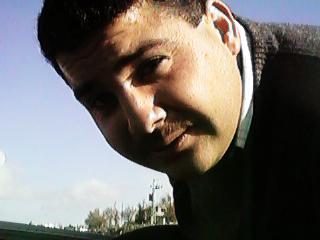
Surda
After we got the redirections from the soldier, who informed us that the tiny group of houses known as “Surda” was unfathomably “under curfew”, we backed up and headed up the settler road towards Beit El. As we approached the junction of the main road leading from Jerusalem to Nablus, the settlement looming on the other side, we noticed that all the road signs were draped with Israeli flags, the latest design change since the Arabic place names were painted out on them. Left turn, through a rather scarey amount of soldiers and military vehicles outside the settlement’s entrance, and we met public relations photographer Yasser Darweesh walking just before Jalazon refugee camp. He peered in and we exchanged complaints. He was trying to get to Ramallah. A little further down on the left, and we turned down the road a kilometer past Jifna. Driving back through Jifna to Birzeit village, we are almost at the university, a journey of half-an-hour from Surda which would have been only 8 minutes direct. We were in a yellow plate car. Times this by the three or four taxis now necessary from here to Ramallah, add in half-an-hour’s walk where the taxis are not allowed to pass, and we’re talking about a two hour journey to somewhere which usually takes 15 minutes to go to, not to mention possible harassment at checkpoints for our Palestinian friends and, of course, waiting time.
Next Entry: Making it to the University, part II | Homepage | Entries Index
Digital photos © Nigel Parry.